I was recently asked to present a keynote at the 2026 WOMEN of BOMA event on “Grit and Growth Across Generations: Women Inspiring Change Together.” When I sat down to collect my thoughts, something unexpected emerged, not the speech I’d planned, but an essay that became a thesis on leadership, women in the workplace, and navigating a world where change is the only constant.
This piece is deeply personal. It draws on 30 years of watching women build careers, and what I’ve learned about the patterns that connect us across generations. I hope it resonates.
— Priya Bhaloo, CEO, TAG HR
What 30 years of watching women at work taught me about anxiety, bravery, and why the workplace finally caught up to us.
I’ve been working in Ottawa for over 30 years, spending the last 23 in recruiting.
I’ve placed women who faxed their resumes, women who negotiated maternity leave policies that didn’t yet exist, and women who now negotiate fully remote arrangements before the first interview ends. I’ve watched careers unfold from first placement to corner office. I’ve seen the same tensions appear, disappear, and reappear under different labels.
I think of myself less as an HR professional and more as a social anthropologist of work. I observe. I look for patterns. I try to understand why before I tell anyone what to do.
And what I’ve been watching lately is a conversation that I think we’re getting slightly wrong.
We keep calling it a generational problem. I don’t think it is.
Every generation responded rationally to the world it inherited
When I started in this industry, the rules for women were unspoken but clear. Show up early. Don’t complain. Earn the room before you open your mouth in it. That wasn’t weakness, that was strategy. That’s what the environment rewarded.
Gen X women figured something else out: the value of invisibility. Self-reliance. Quiet effectiveness. Not asking for recognition because the culture actively punished women who did. I placed a lot of Gen X women over the years. They were extraordinary. Almost none of them would have used that word about themselves.
Then Millennials arrived with something the generations before them didn’t have: language. They could name burnout. They could name inequity. They could articulate, precisely and publicly, what wasn’t working. They got called entitled for it. Soft. I watched it happen in real time. It wasn’t soft. It was the first generation of women who refused to pretend the system was fine when it clearly wasn’t.
And Gen Z, they arrived already knowing things that took the rest of us decades to figure out. Boundaries aren’t selfish. Mental health is not a character flaw. Visibility is not arrogance.
When we judge women across generations, we forget what the world was asking of them when they were being shaped.
Boomers adapted to scarcity. Gen X adapted to invisibility. Millennials adapted to instability. Gen Z adapted to constant exposure and a world that moves faster than any generation before them had to navigate.
What looks like a values gap is almost always a context gap. And that distinction changes everything about how we lead, how we manage, and honestly, how we talk to ourselves about our own careers.
The research that stopped me cold:
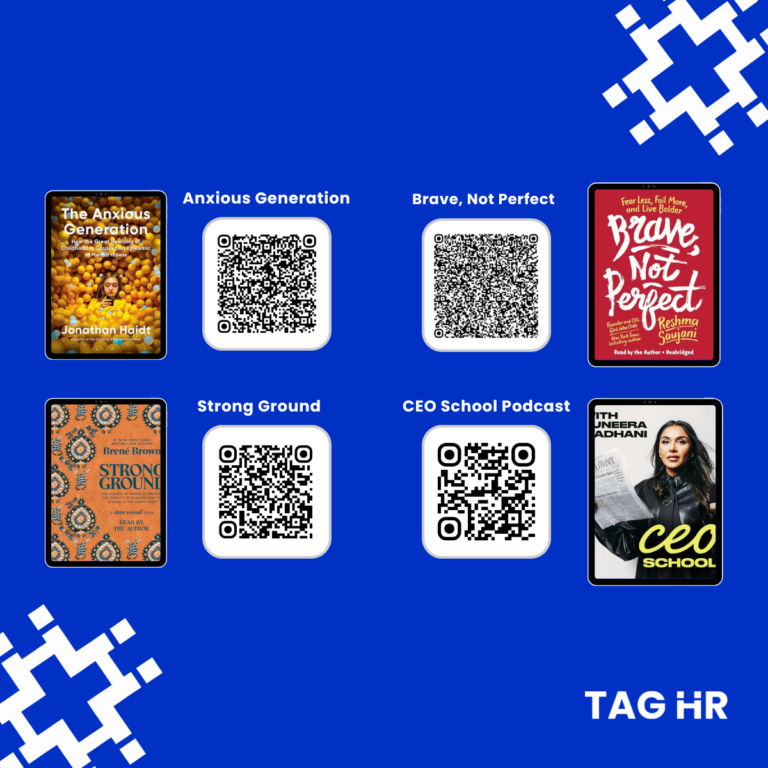
I recently read Jonathan Haidt‘s book The Anxious Generation. And what struck me buried in the research wasn’t what it said about what’s broken in the next generation. It was what it quietly revealed about what women have been building for decades.
Haidt’s work shows that women, despite carrying higher rates of anxiety, have developed stronger social attunement, sharper emotional literacy, and more instinctive collaborative problem-solving. Not because of some inherent advantage. But because the environments women have navigated required these skills to survive.
The modern workplace, ambiguous, fast-moving, relationship-dependent, emotionally visible, now demands exactly these skills.
The world caught up to what women have been practicing all along.
Brené Brown‘s research adds another layer: confidence isn’t bravado. It’s the ability to trust yourself when you don’t have all the answers. In a world that changes faster than any playbook can keep up with, that kind of self-trust is not a soft skill. It’s a structural advantage.
Reshma Saujani, who founded Girls Who Code, identifies the deeper problem: women are trained from childhood for perfection, not bravery. We meet 100% of the criteria before we apply. We rehearse before we speak. We apologize before we disagree.
And from an anthropological lens, that makes complete sense. Perfection was a survival strategy in systems that didn’t welcome mistakes from women. The problem isn’t that we learned it. It’s that the environment changed faster than the strategy.
Then there’s Suneera Madhani, who built a payments company from nothing, who cuts through all of it with one line I keep coming back to:
You don’t wait until you’re confident. You move, and confidence catches up.
I’m not citing these researchers to impress anyone. I’m translating them through three decades of watching real careers in this city and recognizing that what they’re naming in their research, I’ve been watching play out in offices and interviews and placement calls for years.
A framework I actually use:
Based on all of it, the research, the placements, the patterns, here’s the model I’ve landed on. Four layers. Simple language. Things that actually work.
Observe
Before you react, watch. The leaders I’ve seen succeed long-term aren’t the fastest to speak, they’re the most accurate when they do. They slow down enough to understand what’s actually happening in a room before they decide what to do about it.
Anxiety lives here too. And I think anxiety gets an unfair reputation. Anxiety is often information, not weakness. It’s your nervous system telling you to pay attention. The question isn’t how to eliminate it. It’s how to get curious about what it’s pointing to.
Accept
Not accepting the situation. Accepting yourself in the room, at the table, in the role you’ve actually earned.
You cannot take real risks from a place of self-rejection. You cannot advocate for your team when you’re still internally arguing for your own right to be there.
I’ve placed women in senior roles who were technically ready years before they believed they were. I’ve watched women sit across from me in interviews and systematically dismantle their own accomplishments before I had the chance to be impressed by them.
Acceptance is an internal promotion. It doesn’t come from a title change. It comes from the moment you stop waiting for permission to belong in rooms you’ve already earned.
I’ll be honest: I’m still working on this one myself. There are rooms I walk into and still feel the old instinct to shrink, to over-qualify, to make myself slightly smaller so no one feels threatened. I notice it now. That’s the difference.
Be Brave
Not fearlessly. Imperfectly.
The gap between men and women in leadership isn’t primarily about capability. It’s about who acts before they feel ready. Bravery is a muscle you build it by using it before it feels safe. The presentation you give before you’re sure it’s perfect. The salary you negotiate before you’re certain you deserve it. The idea you put forward before you’ve worked out every detail.
I’ve watched women in this city do quietly courageous things for years — and then watch someone else get credit for the outcome because that person was brave enough to be visible about it.
Own the Space
Not loudly. Visibly.
Owning the space means choosing, deliberately not to make yourself smaller to manage other people’s comfort. It means claiming your value in conversations, in negotiations, in the way you carry yourself in rooms you’ve earned the right to be in.
That choice is available to you right now; in the next meeting you walk into.
The language we’ve been missing: career seasons
One of the things that creates the most unnecessary friction between women, across generations and within them, is that we don’t have language for where we actually are.
So here’s what I offer instead of generational labels:
A growth season: you’re stretching, learning, taking risks, probably a little uncomfortable. You need challenges and exposure.
A stability season: you’re consolidating, protecting what you’ve built, performing at a high level without necessarily climbing. You need trust and autonomy.
A recalibration season: something shifted, personally, professionally, or both. You need space and honesty, from yourself and from the people around you.
None of these seasons is better than the others. None of them are permanent. And none of them need to be explained or justified to anyone who hasn’t earned the right to that conversation.
When you understand your own season and when you learn to ask that question of the people you work with before you give them advice, the generational tension largely dissolves. Because what looked like a difference in values was almost always a season difference.
What this actually comes down to
The women I see succeeding right now, across all industries, in business, in leadership are not the least anxious. They’re not the most polished. They’re not the loudest in the room.
They are the most observant. The most willing to accept themselves. The most able to act before they feel entirely ready. And the most committed to owning their space, visibly, honestly, on their own terms.
That’s not a generational trait. It’s a set of choices. Available to every woman in every generation, at every stage of a career.
The workplace didn’t break. It changed faster than our leadership models. And women, who have been adapting to changing rules their entire professional lives, were already better equipped for this moment than most of the models told us we were.
If this is the anxious generation, it is also the adaptive generation. And women have been adapting for decades.
The future of work doesn’t need women to be less anxious, more perfect, or louder.
It needs organizations to finally recognize the leadership women have been practicing all along.
That’s not just a leadership opportunity.
That’s anthropology.
If you enjoyed what you read here and want to learn more about any of these concepts, check out our guide below on the books or podcasts that inspire us: